
JNR 213 series
Data (as of 23 May 2026)
| Status: | Near Threatened |
| (JR West) | |
| Extinct | |
| (JR Central) | |
| Constructed in: | 1987-91 |
| Number built: | 65 |
| Registered: | 52 |
History
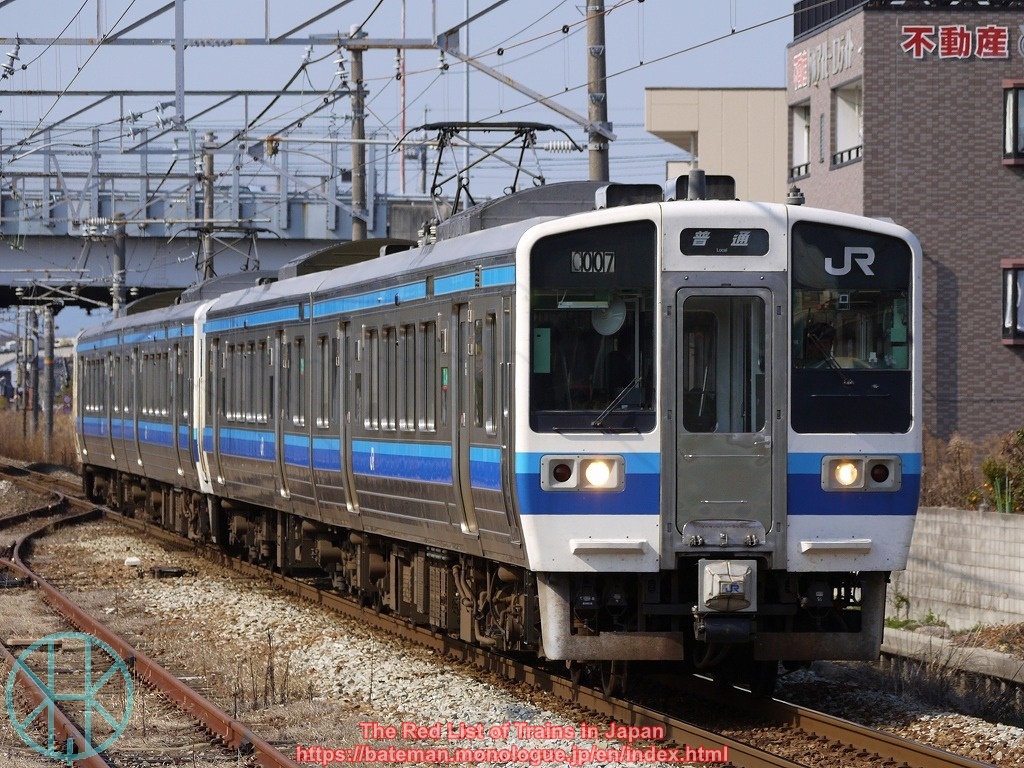
The 213 series is a type of suburban train, and the last train that Japanese National Railways developed. It looks like 211 series, but the 213 series have two sets of doors per carriage with transverse seating. JNR introduced three-carriage units to the Okayama area, a year before the Honshi-Bisan Line (the Great Seto Bridge) was opened. JR Central introduced two-car units to the Nagoya area.
Those in Okayama were initially formed of nine (combining three units) or twelve coaches (four units) and used for stopping services in the area, replacing some 115 series. In 1988, JR West introduced five Green Cars (first class) and allocated them to Rapid Marine Liner service (Okayama - Takamatsu via Great Seto Bridge). However, their traction was damaged by salinity so that the company replaced them with 223 series in 2003. The company rearranged them to two or three-car units with standard class coaches only and reallocated to stopping services in Okayama Prefecture, while all Green Cars were disposed of. Two redundant coaches were converted to an experiment train U@tech, which was deregistered in 2019. In 2016, a two-car unit was converted to a specific train for tourists, named La Malle de Bois.
Meanwhile, JR Central's units had green and orange bands (Shonan Livery). They were initially used mostly on the Kansai Main Line until 2011. They were refurbished with an accessible toilet and reallocated them to the Iida Line until 2026.
Current Operations & Future Prospects
JR West's 213 series were refurbished in 2012-15 and now used on the Ako, Hakubi, San-yo Main and Uno Lines, as well as the Honshi-Bisan Line as far as Kojima. They never enter the island of Shikoku today except La Malle de Bois. Since the 213 series is the newest JNR rolling stock in the area (even though more than 35 years old), they are likely to be in service until the late-2020s or even 2030s.
Photo
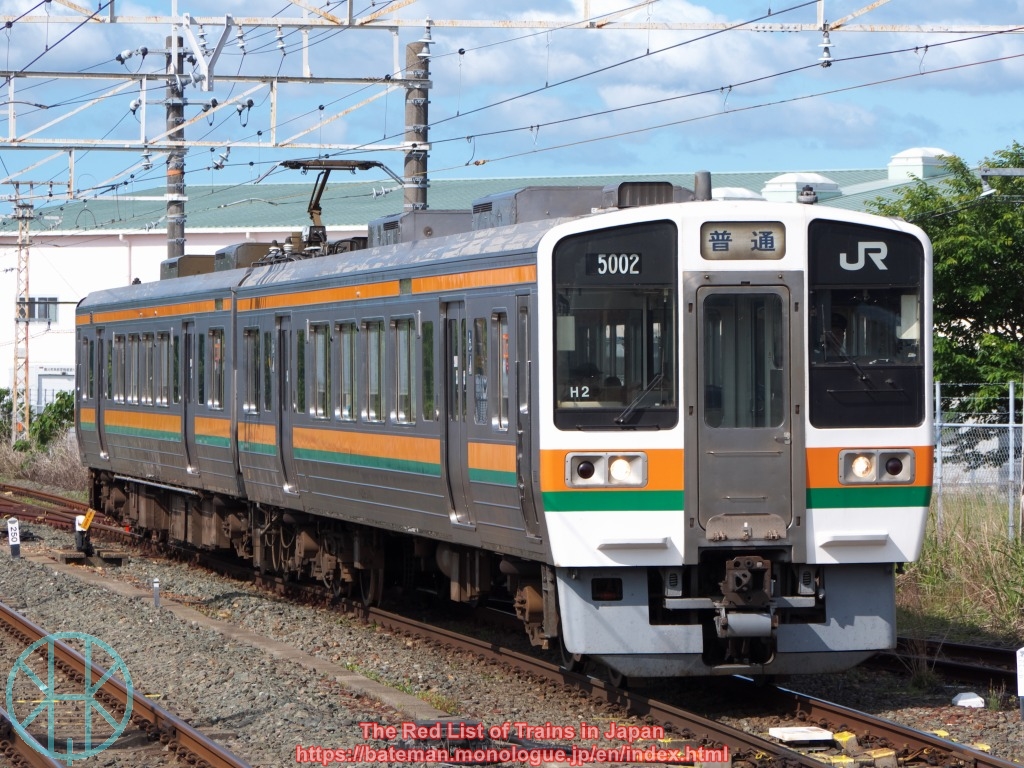
JR Central's unit.
(Updated: 23 May 2026)